
Common Homeowner Questions Answered: Fall Heating Safety & AC Repair in Park City, UT
Is that burning smell normal? Having common homeowner questions answered before winter hits is crucial. See what causes startup odors and when to call a pro.

Diagnosing That First-Cycle Burning Smell: A Fall HVAC Safety Guide
You've just switched your thermostat to "heat" for the first chilly evening of the season, and within minutes, a harsh burning odor fills your home, leading to one of the most common homeowner questions answered by our team every fall. When abrupt temperature drops in Duchesne and Park City force a sudden reliance on your heating system, distinguishing between a normal seasonal odor and a dangerous mechanical failure is critical for your family's safety. While some smells are simply harmless dust burning off after months of inactivity, others indicate severe electrical or mechanical issues that require immediate professional intervention. If you are also evaluating the performance of your cooling system after a long summer, exploring comprehensive air conditioning services alongside your heating checks ensures your entire HVAC system is prepared for the changing weather. Let's break down exactly what causes these startup odors, how to evaluate them safely, and when it is time to shut down your system and call for help.
The Science Behind the October Heating Startup Odor
To understand why your furnace smells like it is burning on the first cold night of the year, we have to look at what happens inside your ductwork and equipment during the summer. For four to six months, your heating components sit completely idle. During this extended period of inactivity, household particles circulate through your home and inevitably settle on the internal components of your furnace.
The accumulation process: According to EPA Indoor Air Quality guidelines, the average home circulates millions of microscopic particles every day. This includes pet dander, dead skin cells, cooking oils, volatile organic compounds (VOCs) from cleaning supplies, and everyday airborne dust. Because the furnace's heat exchanger and burners remain cold throughout the summer, this debris forms a fine, insulated layer over the heating elements.
When you initiate that crucial October heating startup, the burners ignite, and the heat exchanger rapidly climbs to temperatures exceeding 140 degrees Fahrenheit. The sudden, intense heat instantly incinerates the accumulated layer of debris. What you are smelling in your living room is the literal combustion of months' worth of settled household dust being pushed through your vents by the blower motor. While the odor can be pungent and alarming, the physical process is a standard part of seasonal HVAC operation.
Why Summer Inactivity Leads to Fall Odors
The mechanics of your HVAC system play a major role in how this smell is distributed. The blower motor is responsible for pushing conditioned air through your home. When the heating cycle begins, this powerful fan forces air over the freshly heated (and actively burning off) heat exchanger, carrying the combustion odors directly into your living spaces.
Furthermore, high-elevation environments like ours affect how dust accumulates and how systems cycle. At higher altitudes, the air is typically drier, allowing particulate matter to become finer and remain airborne longer before settling deeply into the micro-crevices of your furnace. This ultra-fine dust can sometimes produce a sharper, more noticeable odor when it finally burns off, making the initial startup smell seem more intense than it might be in a more humid, low-elevation climate. While a licensed professional should handle any internal cleaning of these components, understanding this science helps alleviate the initial panic of a smelly startup.
The 30-Minute Rule: Harmless Dust Burn-Off vs. Immediate Danger
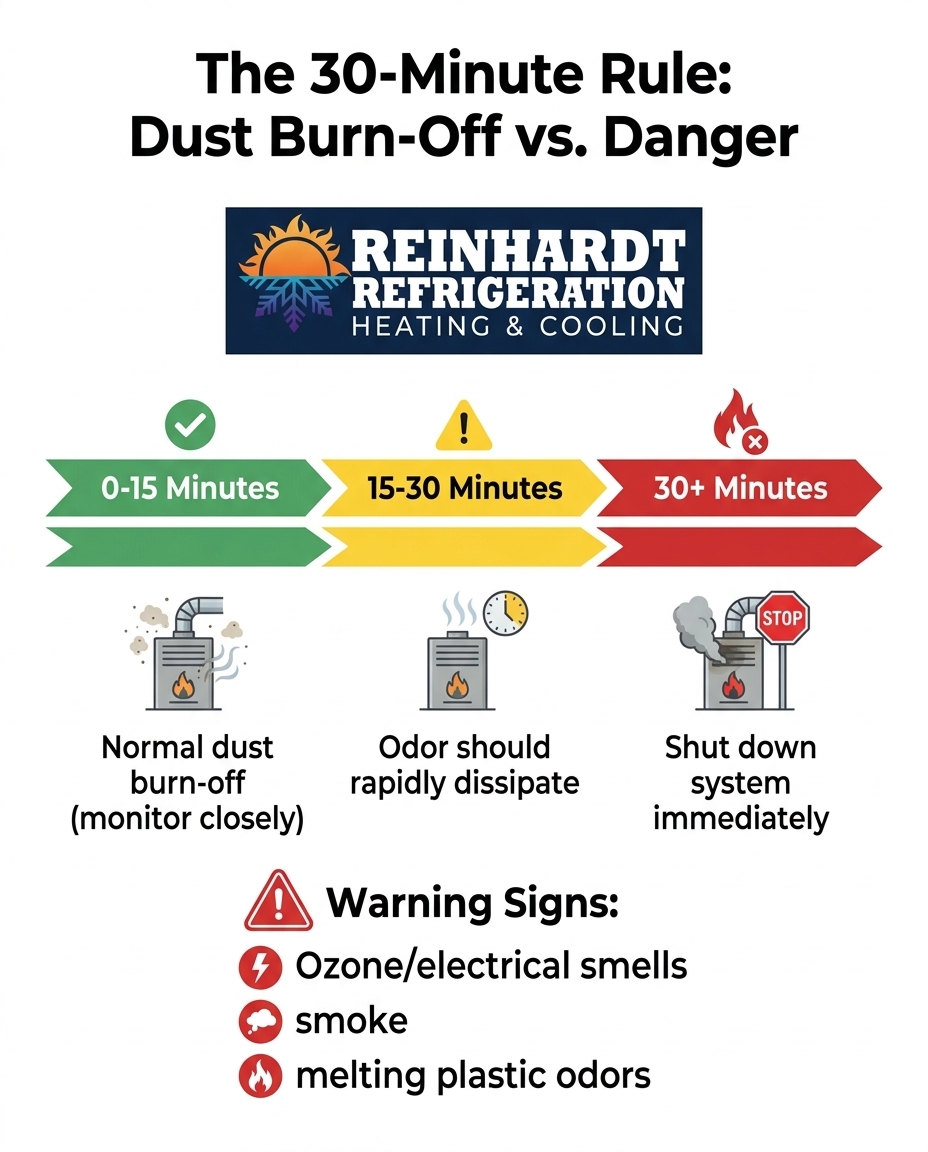
Because the smell of burning dust is so common, homeowners need actionable, safety-first criteria to evaluate whether their furnace is functioning normally or failing dangerously. The most reliable metric for this evaluation is smell duration (under 30 minutes vs. lingering). We call this the 30-Minute Rule, and it is the standard guideline for distinguishing harmless burn-off from an active hazard.
Normal dust burn-off typically dissipates within 15 to 30 minutes of the first heating cycle. By following a strict monitoring protocol, you can safely assess the situation without putting your home at risk. Always defer to National Fire Protection Association (NFPA) heating safety guidelines, which emphasize never leaving a newly started heating system unattended.
1. Document the start time: The moment you turn the thermostat to "heat" and notice the burning smell, check the clock. You need an exact timeline to make a safe decision.
2. Monitor the odor's intensity: For the first 10 to 15 minutes, the smell will likely be at its strongest. Pay close attention to whether the odor is remaining consistent, beginning to fade, or actively getting worse.
3. Ensure proper ventilation: Open a few windows or doors to allow the initial wave of burnt dust to escape the house. This prevents the harmless odor from lingering in stagnant air, which can cause false alarms later in the cycle.
4. Enforce the 30-minute cutoff: At the 30-minute mark, the smell should be entirely gone or barely detectable. If the odor persists beyond 30 minutes, or if it intensifies at any point during the monitoring window, shut off the thermostat immediately.
Never attempt to push through a lingering smell by letting the furnace run for hours. If the odor outlasts the 30-minute window, the issue is no longer seasonal dust—it is a mechanical or electrical problem that requires a licensed technician.
Identifying Dangerous Mechanical and Electrical Odors
While the 30-minute rule helps you evaluate the duration of a smell, you also need to evaluate the type of smell. Burning dust has a very distinct, dry, earthy scent—similar to the smell of a hot clothing iron or a space heater that has just been turned on. If you smell anything else, your system may be experiencing a critical component failure.
Understanding the difference between these odors can save your equipment from catastrophic damage and protect your home from fire hazards. Never attempt DIY diagnosis of internal electrical components; if you detect any of the warning smells below, your only job is to turn the system off.
• Dry, Earthy Burning — Likely Cause: Settled dust on the heat exchanger — Required Action: Monitor for 30 minutes. Normal if it fades.
• Electrical / Ozone — Likely Cause: Failing blower motor or damaged wiring — Required Action: Shut down immediately and call a professional.
• Melting Plastic / Rubber — Likely Cause: Overheating components or melted wire casings — Required Action: Shut down immediately to prevent fire risk.
• Exhaust / Sulfur / Rotten Eggs — Likely Cause: Gas leak or cracked heat exchanger — Required Action: Evacuate the home and contact emergency services.
When to Shut Down the System Immediately
Some situations bypass the 30-minute rule entirely. If you notice the presence of smoke coming from your vents or visible sparking near the furnace cabinet, kill the power at the thermostat and the breaker immediately. Smells resembling burning rubber or melting wires indicate that the electrical insulation inside the unit is failing, which can lead to a dangerous short circuit. Most importantly, if your carbon monoxide detectors trigger at any point during the startup process, you must evacuate the home. A cracked heat exchanger can leak deadly, odorless carbon monoxide into your ductwork, and this requires emergency professional intervention to resolve safely.
Transitioning Seasons: Addressing Summer Wear on Your Cooling System
The first fall heating cycle is not just a test of your furnace; it is also the ideal time to evaluate how your air conditioner performed over the long summer. Because your heating and cooling systems share vital components—most notably the blower motor and the indoor ductwork—issues that developed in July can easily manifest as problems in October.
In our region, the intense Park City summer sun and cooler nights force AC units to cycle frequently. This rapid on-and-off cycling increases the wear and tear on capacitors, contactors, and the compressor itself. By the time fall arrives, your cooling system has endured months of heavy stress. Ignoring the minor rattling or weak airflow you noticed in late August doesn't make the problem go away; it simply guarantees that you will face a broken AC on the first hot day of next spring.
This seasonal transition is the perfect window to schedule professional AC service technicians for an end-of-season evaluation. If your system struggled significantly or suffered a major breakdown late in the season, exploring AC installation options now ensures you are fully prepared for next year without the rush of peak-season scheduling.
End-of-Season AC Evaluation
Assessing late-summer performance: Take a moment to recall how your system ran during its final weeks of operation. Did you notice unusual grinding noises, longer cooling cycles, or a spike in your energy bills? These are strong indicators that the system requires maintenance before it goes dormant for the winter.
The value of proactive repairs: Addressing cooling repairs in the fall is highly strategic. Once deep winter weather arrives, heavy snow and freezing temperatures make accessing and servicing the outdoor condenser unit incredibly difficult. Resolving these issues now protects the equipment from deteriorating further over the winter.
Why Abrupt Utah Temperature Drops Demand Professional Diagnostics
The transition into fall in our service area is rarely a slow, gentle process. Average low temperatures in Duchesne and surrounding areas frequently drop below freezing in October, plunging into the 20s and 30s overnight. This harsh climate reality means that reliable heating isn't just a comfort issue—it is a sudden, urgent necessity to protect your home's plumbing and your family's safety.
Waiting to resolve a lingering burning smell or hoping a failing system will simply fix itself can leave your home dangerously vulnerable to sudden freezing conditions. When a furnace shuts down in the middle of a 25-degree night, the temperature inside your home will plummet in a matter of hours. This is why rapid, professional diagnostics are so critical. A licensed technician can accurately identify whether a burning smell is a minor nuisance or a major hazard, restoring safe, reliable heating before the deep winter freeze sets in.
One local homeowner experienced this transition challenge firsthand when dealing with an HVAC unit over 20 years old during the spring/fall transition. After a technician resolved the initial central air issues, it became clear the aging system wouldn't survive another extreme season. The process ended with a full, trustworthy replacement of both the AC unit and furnace, ensuring the home was completely prepared for any weather the Utah climate could deliver.
Because these breakdowns rarely happen during convenient business hours, having a reliable partner is essential. As a Day And Night Elite Dealer providing 24/7 emergency service, Reinhardt HVAC delivers rapid, reliable solutions when you need them most. If you are unsure whether a startup odor is normal or if your system is behaving erratically, it is vital to know when to call a professional HVAC technician rather than risking your family's winter safety on a guess.
Common Homeowner Questions Answered About HVAC Startup
How long should a furnace smell like burning dust?
A furnace should only smell like burning dust for 15 to 30 minutes during its first cycle of the season. This brief window allows the heat exchanger to incinerate the particles that settled over the summer. If the smell persists beyond half an hour, you should shut the system down and request a professional inspection.
What does an electrical fire in a furnace smell like?
An electrical issue typically produces a sharp, acrid odor that resembles ozone, melting plastic, or burning rubber. Unlike the dry, earthy smell of burning dust, electrical odors often sting the nose and do not fade as the system runs. If you detect this scent, turn off the power at the breaker immediately to prevent a fire.
Is it safe to run a furnace that smells like burning?
It is only safe to run the furnace if the smell is strictly burning dust and it dissipates within the first 30 minutes of operation. If the odor is electrical, smells like exhaust, or continues to linger, running the furnace is highly dangerous. Continuing to operate a failing system can cause catastrophic damage to the blower motor or risk carbon monoxide exposure.
Can a dusty furnace catch on fire?
While the standard layer of summer dust on a heat exchanger is safely incinerated during startup, excessive debris in the blower compartment or a heavily clogged air filter can pose a fire risk. When airflow is restricted by extreme dust buildup, the furnace components can overheat, triggering safety switches or causing internal damage. Regular maintenance and filter changes are the best ways to prevent this hazard.
Why does my AC need service if I only use it in the summer?
Your air conditioner endures massive stress during the intense summer heat, causing wear on electrical components and refrigerant lines that often goes unnoticed until the system fails. Having the system serviced at the end of the season ensures that any worn parts are replaced before they seize up during the winter downtime. Proactive fall service guarantees your AC will be ready to perform flawlessly when the spring heat returns.
When should I worry about furnace smells during the first startup?
You should worry if the smell is accompanied by visible smoke, strange grinding noises, or if the odor lasts longer than 30 minutes. Additionally, any smell that resembles rotten eggs or sulfur indicates a potential gas leak, which requires immediate evacuation. When in doubt, trusting a professional diagnostic is always safer than waiting to see if the smell goes away.
Ensure Your Home's Comfort and Safety This Season
While a brief period of dust burn-off is a completely normal part of your October heating startup, persistent odors require expert attention. The safety of your family and the integrity of your home depend on a heating system that operates flawlessly when the Utah temperatures drop. Professional diagnostics eliminate the guesswork, ensuring that what you smell is just harmless dust and not a looming mechanical failure. Whether you need a comprehensive inspection for your furnace or want to address lingering cooling issues with expert AC repair in Park City, taking proactive steps today guarantees peace of mind tomorrow. Schedule your seasonal tune-up now to get your most common homeowner questions answered and secure your home's comfort for the long winter ahead.
Book Expert Service Or Contact Us
Clients Say About Us
Customer Testimonials
Customers appreciate our reliable service, clear communication, and the peace of mind that comes from knowing their HVAC needs are handled by experienced professionals.
Very happy with their service. We had a different company install a heat pump for us and they totally messed everything up. Reinhardt was willing to work with us and help us out even though it was not their mistake. They were fast and fixed the issues. I appreciate their help and will use them again!
Gary H.

Thank you for your customer service.. My furnace wasn’t getting power.. There service repair man came within a couple of hours of calling and fixed the problem.. I appreciate them accommodating me so quickly..
Pearl W.
Prompt Courteous Service ! We highly recommend Reinhardt for all your HVAC needs. The Best !!!!
Mike Y.
These guys are truly truly the best. They have saved us from scorching heat (it was sure hot a couple times when the AC needed something ) and freezing cold (when fixed the heater). Can't even come close to saying how great they are!
Lynne B.
My AC went out and they were able to come the next day. Fixed in about 30 minutes. Great service.
Cody A.
Working with Paul has been great. He was prompt with his communication with me, timely in his service and fair with his price! Everything I was looking for in someone to do HVAC for my new house!
Blake J M.
I just have to say thank you to them for the work they do. Reinhardt came out when our heat pump was dripping water in places where it shouldn't. They were very courteous and prompt. Definitely a great team there and I highly recommend them.
Steven T.
I will use them for all of my hvac needs! They came and installed a new AC unit for me and they were done in an afternoon. Their pricing is fair and they were so friendly! Didn’t seem like an issue to get me in like some other companies.
Lexie R.
Ready to Transform your Home?
Pre-Qualify Without Impacting Your Credit



Related Articles