
Why Your Heat Pump is Leaking Water Indoors (And What to Do Before We Arrive)
A growing puddle around your indoor air handler is a serious emergency during peak cooling season. Safely shut down the system immediately to prevent costly drywall and flooring damage.

Noticing Water Pooling Around Your Indoor Heat Pump?
You walk past your utility closet or basement air handler and notice a growing puddle on the floor, leaving you frantically searching for why your heat pump is leaking water indoors (and what to do before we arrive). At Reinhardt Refrigeration Heating & Cooling, we know that finding water where it does not belong is one of the most stressful situations a homeowner can face, especially during peak cooling season when you rely on your system the most. While heat pumps naturally produce a significant amount of condensation as they cool your home, that moisture is designed to be routed safely outside. When it ends up on your indoor floors instead, it signals a mechanical or drainage failure that requires immediate attention.
The immediate priority is not diagnosing the exact mechanical failure—it is stopping the flow of water to protect your drywall, framing, and expensive flooring from permanent damage. Taking swift, safe action can mean the difference between a simple repair and costly secondary home repairs.
If you are dealing with an active leak right now, shut the system down immediately and reach out for 24/7 emergency HVAC repair to protect your property and get your heat pump systems back online safely.
Immediate Triage: 3 Steps to Safely Shut Down Your System
When you discover water pooling around your indoor air handler, your first instinct might be to grab a bunch of towels and start wiping it up. However, as long as the system is running, it will continue to produce more water. In late summer, particularly during the hot days of August as families transition back to school routines, a running heat pump can generate gallons of condensation very quickly. You must stop the water production at the source before you do anything else.
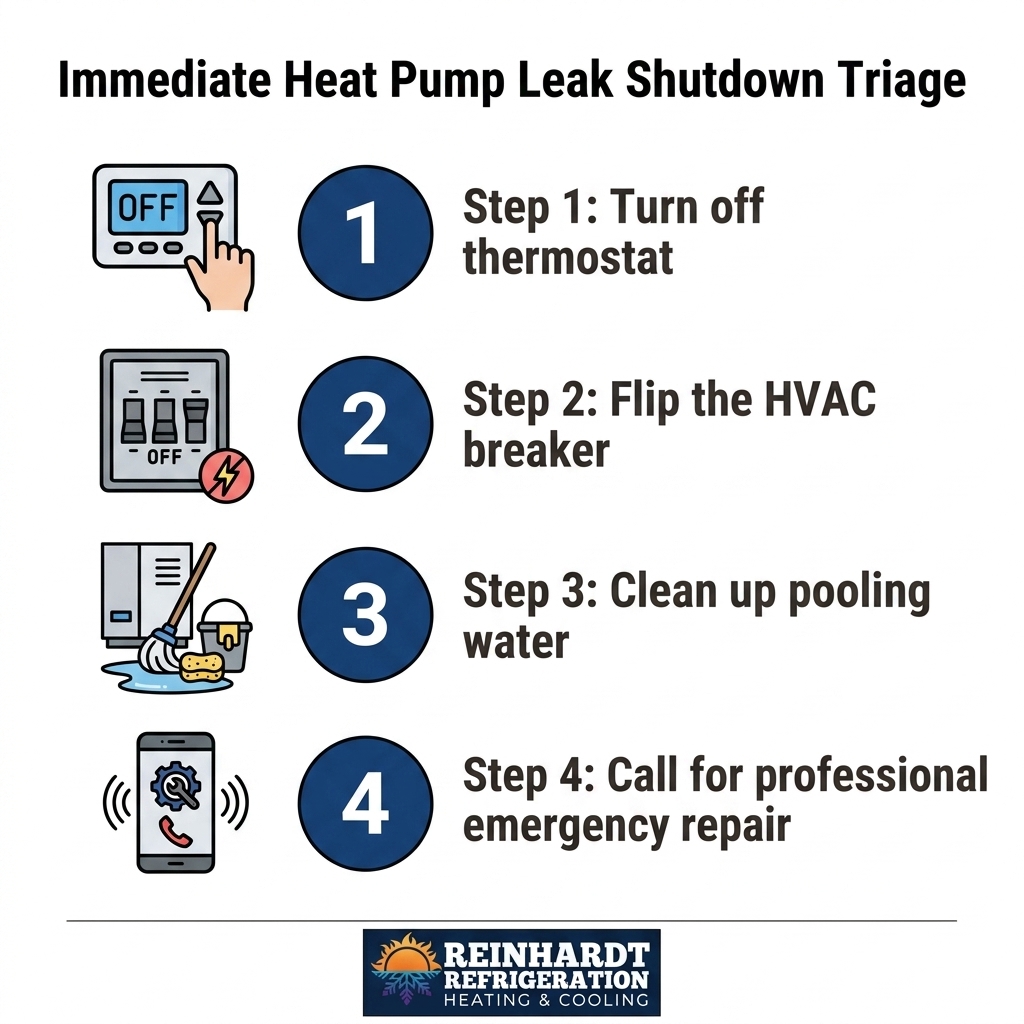
Follow these three safe steps to secure your system without putting yourself at risk of electrical shock or causing further damage to the equipment:
1. Step 1: Turn the system completely off at the thermostat immediately. Do not simply turn up the temperature; switch the thermostat setting from "Cool" or "Auto" to the "Off" position. This stops the indoor blower motor and the outdoor compressor from running, which immediately halts the condensation process.
2. Step 2: Locate your electrical panel and flip the breaker for the HVAC system. Because water and electricity are a highly dangerous combination, you need to ensure no live electricity is flowing to the wet air handler. Find your main breaker box and switch off the breaker labeled for your indoor air handler or furnace. If the floor around the unit is heavily flooded, do not step into the water to reach a localized shut-off switch.
3. Step 3: Clean up the immediate pooling water to protect your floors. Once the power is safely disconnected, lay down thick towels or use a wet/dry shop vacuum to remove the standing water. Pay special attention to water that is creeping toward baseboards, drywall, or finished flooring like laminate and hardwood, as these materials absorb moisture rapidly and warp.
Common Reasons Your Heat Pump is Leaking Water Inside
To understand why a leak happens, it helps to understand how your system handles moisture. During the cooling process, your heat pump acts as a powerful dehumidifier. Warm indoor air blows across the freezing cold evaporator coil inside your air handler. As the air cools, the moisture in that air condenses into liquid water droplets—just like water forming on the outside of a cold glass of iced tea on a hot day. This water drips into a drain pan and flows outside through a PVC pipe.
In our experience serving the area, the heavy, continuous cooling cycles required during hot Duchesne summers mean your system is extracting maximum humidity. Our team frequently sees this extreme volume of condensation lead to late-summer clogs and overflows. Here is a breakdown of normal operation versus an abnormal leak:
• Moisture Location — Normal Operation: Dripping from the outdoor PVC pipe outside the house. — Abnormal Leak (Requires Repair): Pooling around the indoor air handler or dripping from ceiling vents.
• Drain Pan Status — Normal Operation: Contains a small amount of flowing water that drains quickly. — Abnormal Leak (Requires Repair): Completely filled to the brim, overflowing, or bone dry with water underneath.
• Evaporator Coil — Normal Operation: Cold and wet with liquid condensation. — Abnormal Leak (Requires Repair): Encased in a solid block of white ice.
When the system fails to manage this water correctly, you need professional AC repair in Duchesne to resolve the underlying mechanical issue. The most frequent culprits fall into a few distinct categories.
The Role of the Condensate Drain Line
The condensate drain line is typically a 3/4-inch white PVC pipe that routes water from the indoor drain pan to the outside of your home. Because this pipe is constantly dark and damp, it is the perfect breeding ground for biological growth. By the time August rolls around, months of accumulated dust, dirt, and algae can form a thick sludge that completely blocks the pipe. When the water cannot exit the home, it backs up into the drain pan until it eventually overflows onto your floor or through your ceiling.
How Airflow Issues Lead to Frozen Coils
Another highly common cause of indoor leaks is a frozen evaporator coil. If your system is starved for air—usually due to a severely clogged air filter or blocked return vents—the temperature inside the air handler drops too low. The condensation on the coil freezes into solid ice instead of dripping away. When the system eventually turns off, that massive block of ice melts rapidly. This sudden deluge of water easily overwhelms the capacity of the drain pan, causing a massive spill inside the home.
Cracked or Rusted Drain Pan
Beneath the evaporator coil sits the primary drain pan. Over years of use, older plastic pans can become brittle and crack due to temperature fluctuations, while metal pans can rust through. If the pan itself has a hole in it, the water will simply bypass the drain line entirely and leak directly into the bottom of the air handler cabinet and out onto your floor.
The Hidden Dangers of Ignoring an Active HVAC Leak
Our technicians always warn homeowners that an indoor water leak from a heat pump is never a problem that can wait until next week. The water produced by your HVAC system is continuous as long as the system runs, meaning a small drip can turn into a localized flood in a matter of hours. Ignoring the issue or just placing a bucket underneath it exposes your home to severe secondary risks.
• Rapid structural water damage: Drywall absorbs water like a sponge, losing its structural integrity and crumbling. Laminate flooring will warp, swell, and separate at the seams, often requiring complete replacement if left wet for more than 24 hours. Framing wood can begin to rot if the area is repeatedly soaked.
• Accelerated mold and mildew growth: Utility closets, basements, and attics are typically dark, warm, and poorly ventilated. Introducing standing water into these environments creates the perfect conditions for toxic mold to bloom, often within 48 hours of the initial leak. This compromises your indoor air quality and requires expensive remediation.
• Severe electrical hazards: Your indoor air handler houses high-voltage wiring, a powerful blower motor, and sensitive electronic control boards. If overflowing water reaches these electrical components, it can cause catastrophic short circuits, electrical fires, or severe shock hazards for anyone standing near the unit.
• Pest infestations: Standing water in a utility space attracts insects and rodents looking for a reliable water source, compounding the damage to your home.
Why DIY Drain Line Clearing Can Cause More Harm Than Good
When faced with a clogged drain line, many homeowners are tempted to look up quick fixes online. However, attempting to clear a blocked condensate line or open the air handler cabinet without proper training often leads to much more expensive repairs. Modern HVAC systems are complex, tightly engineered machines, and amateur interventions carry significant risks.
The danger of harsh chemicals: A common internet myth suggests pouring straight bleach down the drain line to clear algae. Bleach is highly corrosive. Over time, it degrades the PVC piping, eats away at the glue holding the joints together, and can cause permanent damage to the metal drain pan. This turns a simple clog into a full pipe replacement.
The risk of physical damage: Using wire coat hangers, plumbing snakes, or high-pressure air compressors to force a clog out often results in a cracked pipe. PVC is rigid, and applying too much physical force or pressure can shatter the line inside your walls. Furthermore, aggressive plunging can dislodge the drain pan entirely, throwing it out of alignment so that it never drains properly again.
Electrical and warranty risks: Opening the sealed air handler cabinet exposes you to live high-voltage wiring and the delicate evaporator coil. Damaging the coil while trying to clean it can lead to a massive refrigerant leak, which is a highly expensive repair that goes far beyond preventing AC compressor burnout. Additionally, most manufacturer warranties explicitly state that any internal maintenance performed by unlicensed individuals will void the warranty entirely.
What to Expect When Our Emergency Technicians Arrive
We understand that an active indoor leak is a highly stressful event. Just recently, our team at Reinhardt Refrigeration Heating & Cooling walked a local homeowner through an emergency shutdown over the phone while en route after their heat pump started dripping water from unexpected places like their ceiling vents. A technician promptly arrived to address the issue, preventing serious drywall damage and safely restoring the system.
When our professional technicians arrive at your home, they follow a strict, safety-first protocol to resolve the root cause of the leak permanently.
Ensuring electrical safety: The very first step is verifying that the system is completely disconnected from power. Technicians use multi-meters to confirm there is no stray voltage near the standing water, ensuring the work area is completely safe before touching the cabinet.
Professional diagnostic tools: We do not rely on guesswork. Technicians use specialized professional-grade wet vacuums and regulated nitrogen blasts to safely and effectively clear stubborn biological clogs from the drain line without damaging the PVC. If the issue is a frozen coil, we use psychrometers to measure airflow and determine exactly why the system froze in the first place.
Comprehensive system inspection: Clearing the immediate clog is only half the job. The technician will perform a full inspection of the evaporator coil, test the integrity of the drain pan, check the refrigerant levels, and ensure the system is draining at the proper slope. This comprehensive approach ensures that once the system is turned back on, it stays dry and runs efficiently for the rest of the season.
Frequently Asked Questions About Indoor Heat Pump Leaks
Should I turn off my heat pump if it's leaking?
Yes, you should turn off your heat pump immediately at the thermostat and the breaker if you notice an indoor leak. A running heat pump continuously extracts moisture from the air, meaning it will keep producing water as long as it operates. Turning the system off halts the condensation process, preventing further water from overflowing the drain pan and damaging your floors or drywall. Additionally, shutting off the breaker protects the system's internal wiring and control boards from water damage, eliminating a severe electrical hazard.
Is it dangerous if my heat pump is leaking water?
Yes, an indoor heat pump leak can be highly dangerous due to the combination of water and high-voltage electricity. If water overflows into the blower motor compartment or reaches the electronic control boards, it can cause a dangerous short circuit or create a shock hazard for anyone near the unit. Beyond the immediate electrical danger, standing water poses a significant risk of structural damage to your home and promotes the rapid growth of toxic mold, which can severely impact your indoor air quality and respiratory health.
Why is my heat pump leaking water inside in summer?
During the summer cooling season, the indoor coil of your heat pump acts as an evaporator. As warm house air blows over this freezing coil, heavy humidity is pulled from the air and condenses into liquid water. In peak summer heat, the system runs continuously, producing gallons of water every day. If the drain line that carries this water outside becomes clogged with seasonal dust or algae, all that extracted summer humidity has nowhere to go. It backs up into the drain pan and eventually overflows inside your home.
How much water is normal for a heat pump to drain?
It is completely normal for a heat pump to drain several gallons of water a day during peak summer cooling cycles. The exact amount depends on the humidity levels inside your home and how long the system runs. However, 100% of this water should be routed safely outside through the condensate drain pipe. It is never normal for even a small amount of that water to pool inside your home, drip from the indoor cabinet, or leak from your ceiling vents.
Can a dirty air filter cause my heat pump to leak?
Yes, a severely dirty air filter is a very common cause of indoor water leaks. When a filter becomes clogged with dust and pet hair, it severely restricts the airflow moving over the indoor evaporator coil. Without enough warm air passing over it, the coil drops below freezing, turning the normal condensation into a solid block of ice. When the system eventually cycles off, that large mass of ice melts much faster than the drain pan can handle, causing a massive overflow into your home.
Stop the Leak and Protect Your Home Today
A leaking heat pump is a highly time-sensitive emergency that requires fast, decisive action. Every hour that water sits on your floors or soaks into your drywall increases the risk of permanent property damage and mold growth. While it is stressful to discover a puddle around your air handler, you do not have to handle the aftermath alone.
If you are dealing with a leak in Duchesne UT, your first step is to shut the system down safely at the breaker. Your next step is to call our team at Reinhardt Refrigeration Heating & Cooling. Our emergency technicians are ready to respond quickly, clear the blockage safely, and restore your system's proper drainage so you can cool your home without worrying about water damage.
Book Expert Service Or Contact Us
Clients Say About Us
Customer Testimonials
Customers appreciate our reliable service, clear communication, and the peace of mind that comes from knowing their HVAC needs are handled by experienced professionals.
Very happy with their service. We had a different company install a heat pump for us and they totally messed everything up. Reinhardt was willing to work with us and help us out even though it was not their mistake. They were fast and fixed the issues. I appreciate their help and will use them again!
Gary H.

Thank you for your customer service.. My furnace wasn’t getting power.. There service repair man came within a couple of hours of calling and fixed the problem.. I appreciate them accommodating me so quickly..
Pearl W.
Prompt Courteous Service ! We highly recommend Reinhardt for all your HVAC needs. The Best !!!!
Mike Y.
These guys are truly truly the best. They have saved us from scorching heat (it was sure hot a couple times when the AC needed something ) and freezing cold (when fixed the heater). Can't even come close to saying how great they are!
Lynne B.
My AC went out and they were able to come the next day. Fixed in about 30 minutes. Great service.
Cody A.
Working with Paul has been great. He was prompt with his communication with me, timely in his service and fair with his price! Everything I was looking for in someone to do HVAC for my new house!
Blake J M.
I just have to say thank you to them for the work they do. Reinhardt came out when our heat pump was dripping water in places where it shouldn't. They were very courteous and prompt. Definitely a great team there and I highly recommend them.
Steven T.
I will use them for all of my hvac needs! They came and installed a new AC unit for me and they were done in an afternoon. Their pricing is fair and they were so friendly! Didn’t seem like an issue to get me in like some other companies.
Lexie R.
Ready to Transform your Home?
Pre-Qualify Without Impacting Your Credit



Related Articles